Survive Your First Week in Mystery Lake on Switch: Controls, tips and where to head next in The Long Dark
Welcome to The Long Dark. This guide is for new players starting on the Nintendo Switch. If you want to survive your few days without starving, freezing, or getting mauled, start here.
Controls on the Switch
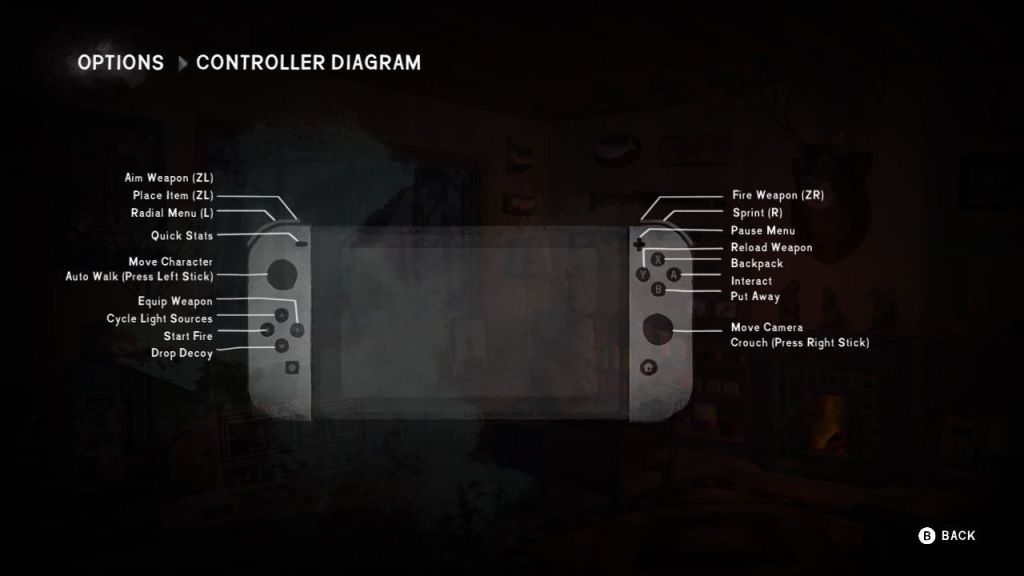
| Button | Action |
|---|---|
| ZL | Aim Weapon / Place Item |
| L | Radial Menu |
| Left Stick | Move Character |
| Press Left Stick | Auto Walk |
| Right Stick | Move Camera |
| Press Right Stick | Crouch |
| + (Plus) | Pause Menu |
| – (Minus) | Quick Stats |
| Up (D-Pad) | Equip Weapon |
| Right (D-Pad) | Cycle Light Sources |
| Down (D-Pad) | Start Fire |
| Left (D-Pad) | Drop Decoy |
| A | Interact |
| B | Put Away |
| X | Backpack |
| Y | Reload Weapon |
| ZR | Fire Weapon |
| R | Sprint |
Difficulty Settings: Choose Your Pain (Or Not)
The Long Dark doesn’t hold your hand. It drops you in the snow and expects you to figure it out – or freeze trying. But at least you get to pick how bad it is.
Here is a breakdown of the five difficulty options, including the infamous Misery:
| Mode | What to Expect | Beginner-Friendly? |
|---|---|---|
| Pilgrim | Peaceful, wildlife runs away, lots of supplies | Yes – stress-free start |
| Voyageur | Some threats, decent loot, manageable weather | Yes – good balance |
| Stalker | Wildlife hunts you, supplies sparse | No – combat-heavy |
| Interloper | No guns, brutal cold, scarce loot | No – very punishing |
| Misery | Worse than Interloper, added mechanics | Absolutely not |
So Which Should You Pick?
• Pilgrim: Best if you want to take your time. No wolf attacks, plenty of loot, and a good way to learn the basics without fear of surprise death-by-bear.
• Voyageur: Still beginner-friendly, but you’ll need to think ahead. Wolves are a real threat, but you have enough supplies and time to prepare.
What about Stalker, Interloper & Misery?
You could pick them. You could also throw yourself into a snowdrift and punch a bear. They are valid choices, but not wise for your first week.
• Stalker: Ramps up predator aggression and cuts back on resources. If you want to feel like hunted meat wrapped in second-hand flannel, be my guest.
• Interloper: Goes further. No guns, freezing temps and loot so rare you’ll celebrate finding a burnt-out torch. It’s for players who already know what they are doing – and enjoy suffering.
• Misery: It was made to break you. Don’t even think about it until you’ve survived 100+ days and start feeling too confident.
Start With Pilgrim or Voyageur. You’ll have enough to deal with learning the mechanics, not just dodging teeth and frostbite every five minutes.
Why Mystery Lake?
Mystery Lake is the ideal starting point for new survivors in The Long Dark. If offers a balanced mix of resources, manageable threats, and clear landmarks, making it a forgiving environment to learn the game’s mechanics.
Map of Mystery Lake

Survival Basics: Managing Your Core Needs
Surviving in The Long Dark means managing your four key stats: Warmth, Rest, Hunger, and Thirst. Ignore them, and nature will handle your obituary.
- Warmth: Your biggest threat, dress in layers, get indoors and don’t stand around.
- Calories: Eat food to keep your health and stamina. Always cook your meat.
- Thirst: Melt snow and then boil it. Dysentery is real.
- Fatigue: Sleep in a bed, a bedroll, a cave, or a snow shelter. Resting restores health, but not in the cold.
Watch your condition meter. The cold and hunger can drain it. Should it reach zero, your run ends.
Starting Gear & Priorities
You begin with random gear, unless on Pilgrim, or Wintermute (Story mode). Your first day you should focus on the following:
- Shelter: Find an interior (a cabin, a house, or cave). Fires and clothing can only do so much.
- Clothing: Layer up. Wool beats cotton. Avoid wet clothes.
- Fire: Collect matches, sticks, coal. Fire = life.
- Food & Water: Melt & boil snow ASAP. Scavenge canned goods.
- Tools: Knife, hatchet, prybar, can opener. All valuable – loot widely.
Avoid wolf, bear and moose fights unless you are armed and armored. Spoiler: You’re probably not.
Navigating & Mapping
There’s no magic mini-map. You’ll need to:
- Use landmarks (train tracks, water towers, road signs).
- Sketch charcoal maps at vista points, or shelters.
- Drop markers to show where you have been. This can be done with the spray can.
Pro tip: You can’t use charcoal indoors, and mapping can’t be done in poor visibility conditions.
The User Hub: Your In-Game Lifeline
The User Hub (accessible via the Backpack button) isn’t just fluff. It’s a goldmine or survival management features.
- Journal: Tracks days survived, afflictions, feats and milestones.
- Stats: Shows distance travelled, calories burned.
- Crafting Menu: See what you can create from harvested resources.
- Map Screen: Only shows what you’ve manually mapped.
- Backpack: Shows what you are carrying and the condition of each item.
Use the User Hub to plan ahead. Is your bedroll close to breaking? Out of antibiotics? The Hub will tell you. It is your clipboard for not dying.
Dangerous Wildlife & Weather
The cold is your biggest threat, but animals will also ruin your day.
Threat List
- Wolves: Can be scared off by torches or flares. Sneaking or avoidance is best until you’re ready to deal with them.
- Bears: Don’t bother. If you see one, back away slowly. If it charges, well… reload your save. There is a chance you might get extremely lucky and score a headshot, like I do in the video (You will need brightness up), if not, then enjoy the close up.
- Moose: Passive unless provoked. If they stomp you, say goodbye to your ribs.
- Cougars (Tales DLC): Fast, quiet, deadly. If you hear growling and don’t head anything, it’s already too late.
Bad weather (blizzards, whiteouts) will destroy visibility and drain your temperature quickly. Always carry enough fire-starting supplies to hunker down and start a fire if needed. Also be prepared for the weather to change at the drop of a hat.
Beginner Tips & Common Mistakes
- Don’t loot everything: You’ll become over encumbered fast. Prioritize clothing, food, tools, and fire gear.
- Watch item conditions: Gear breaks down. Repair it with cloth, cured leather, sewing kits, or scrap metal.
- Carry backups: Have at least two fire-starting tools and two food resources.
- Check drawers & under beds: Missed loot is common.
- Use torches to scare wolves: You can pull these from any lit fire, then carry them with you.
Recommended Daily Routine (Voyageur)
| Time | Activity | Why |
|---|---|---|
| Dawn | Cook, melt snow, eat/drink | Start the day warm, hydrated, and with calories |
| Morning | Explore, loot, travel | Best visibility and warmth during the day |
| Midday | Return or find shelter | Prepare for nightfall, avoid freezing |
| Afternoon | Repair gear, craft, organize supplies | Productive time indoors when temps drop |
| Evening | Eat, hydrate, read, rest | Wind down while staying warm |
| Night | Sleep 6–10 hours | Restore condition and save progress |
Conclusion & Actionable Takeaways
The Long Dark rewards caution, planning, and resourcefulness. Don’t try to sprint through survival—embrace the slow burn.
To Survive Your First Week
- Start on Voyageur or Pilgrim difficulty.
- Pick Mystery Lake.
- Prioritize warmth, water, food, and rest – in that order.
- Use the User Hub to regularly check conditions, plan crafting and log progress.
- Always have a backup plan, especially during travel.
Survival isn’t about heroism—it’s about not making dumb decisions. Learn from your failures, and you’ll last longer each run. The cold isn’t going anywhere. Neither is the moose.
Have questions or near-death stories like I did with that bear? Drop them below.

 Survivor Incognito