The Year Can Wait

New Year’s Day has a habit of arriving with expectations attached.

Start fresh. Make plans. Fix things. Become something new. The noise tends to show up early, whether you asked for it or not.

But today doesn’t need momentum.

I don’t have a clear picture of what this year will bring for me, and I’m okay with that. Not everything needs to be mapped out before it begins. Uncertainty doesn’t mean failure — it just means the story hasn’t unfolded yet.

There’s no rule that says the year has to begin at full speed. You don’t need goals, resolutions, or a clear direction before lunch. You don’t even need a plan yet.

It’s fine to let the day stay quiet. To rest. To do very little. To treat today as a soft landing rather than a starting line.

The year will still be there tomorrow. And the day after that. It doesn’t need to be rushed into.

If all you do today is exist, recover, or reset in small ways, that’s enough.

The year can wait.

Survivors Log: Year End

Status: Still standing
Theme: Survival over spectacle

The year ends the same way most of these runs do: not with a clean win, but with something still breathing.

Some worlds were conquered. Some were abandoned. A few are still waiting patiently, half-built, half-haunting, exactly where I left them.

That’s survival.

What Held

  • The rule sets worked. Fewer restarts. More stories.
  • Lower difficulty didn’t weaken the experience — it strengthened it.
  • Permadeath stayed meaningful without becoming punishment.
  • Writing stayed honest, even when progress slowed.

What Fell Apart (As Intended)

  • Runs that stopped being fun were ended.
  • Ideas that existed only on paper stayed there.
  • Perfection was ignored.

No apologies. Survival means knowing when to walk away.

The Ongoing Truth

This site isn’t about mastery.

It’s about learning a system, bending it slightly, and seeing how long you last.

This site began by pushing back against the idea that easier difficulties don’t count.

It’s evolved into something simpler: difficulty isn’t the point — survival is.

That hasn’t changed.

Looking Forward

  • Fewer series. Better focus.
  • More logs. Less noise.
  • The rules may change.
  • The chaos will stay.

Adaptation is part of survival. Refusal to adapt is how runs end early.

Log Conditions

Log recorded: Final days of the year.
Conditions: Cold outside. Quiet inside.

No deadline pressure. No content calendar panic. Just time enough to take stock before stepping back into whatever comes next.

No Roadmap

There’s no roadmap.

No checklist. No promise that every idea will make it to the end.

That uncertainty is deliberate. Survival doesn’t come with guarantees — just decisions made under pressure.

Rule Reminder

Reminder: These runs aren’t about winning.

They’re about lasting long enough to leave notes behind.

Marks on the map. Lessons learned the hard way. Evidence that someone was here, tried, and didn’t immediately disappear.

A Quiet Thanks

If you’ve stumbled onto this little corner of the internet — intentionally or by accident — thanks for sticking around.

No algorithms to beat. No hype cycle to chase. Just survival logs, written as they happen.

If you’re still reading at this point, you’re already part of the experiment.

End of year status: Alive. Scarred. Still playing.

Next log: When the cold, the dark, or something worse decides to test me again.

Surviving, Not Suffering.

Before the Year Turns Over

New Year’s Eve has a habit of asking a lot of questions.

Was the year good enough? Did you do enough? Should you have done more, or done things differently? It’s easy to start weighing everything up once the calendar starts getting ready to flip.

Tonight doesn’t need that.

The year doesn’t need a verdict. It doesn’t need to be ranked, scored, or justified. It happened. Some parts worked. Some didn’t. Most of it probably sat somewhere in the middle.

It’s okay to acknowledge what went well without turning it into a highlight reel. It’s also okay to recognise the harder parts without dragging them forward into the next chapter.

For me, tonight is just about stopping for a moment. Letting the noise settle. Letting the year end without rushing to explain it.

Whatever this year was for you — busy, quiet, heavy, light, or something in between — it’s allowed to finish as it is.

No pressure. No promises. Just a pause before the next page.

Quiet Wins: The Long Dark Map Hub

This isn’t a big announcement, and it’s not a victory lap. It’s just one of those small moments that make the work feel worth it.

While updating my The Long Dark map hub, I noticed it sitting comfortably on the first page of search results — consistently, across different browsers. Not first. Not flashy. Just… there.

What made me smile wasn’t the number. It was why it was there.

The page hasn’t been gamed or stuffed with keywords. It’s static maps, clear layouts, and information that actually works when you’re cold, lost, and trying to remember which rope goes where. I’ve been slowly improving the maps and adding proper coverage for harder difficulties like Interloper and Misery, one region at a time.

No rush. No rebuild. Just making something useful and letting it settle.

If nothing else, it’s a reminder that quiet progress still counts — even when nobody’s clapping.

Related:
The Long Dark – Complete Region & Transition Zone Map Guide

The Long Dark: Stalker Instinct – Announcement

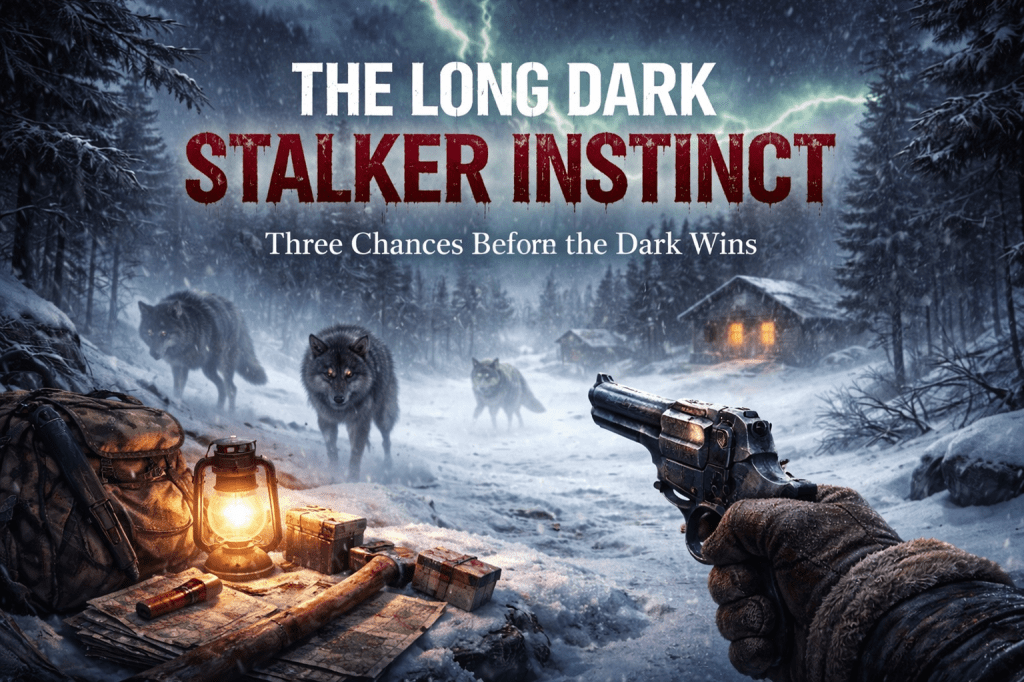
The Long Dark: Stalker Instinct

Three Chances Before the Dark Wins

I didn’t plan this.

But plans rarely survive contact with Great Bear Island.

In the new year, I’ll be returning to The Long Dark on Stalker difficulty.
Not to prove anything. Not to play perfectly.
Just to see how long I can last when the world decides it’s done being forgiving.

This run will use the Cheat Death mechanic.
Not as an escape hatch, but as a countdown.

Three chances. That’s it.

Each death pushes the run closer to its end.
Each mistake lingers longer.
Each lesson may or may not be learned in time.

This isn’t about winning.
It’s about surviving long enough to leave notes behind.

More details soon.
For now, just know this:

The cold is waiting.


Stalker Instinct: A The Long Dark Stalker Survival Diary →

This also marks the start of a long-overdue update to The Long Dark map hub. Interloper and Misery are finally getting proper coverage, with maps split by difficulty to reflect real loot behaviour rather than false guarantees.

Tradition, Adaptation, and Why the Argument Is Over

This post exists so I don’t have to keep repeating the same points in fragments. It’s not a debate invitation. It’s a reference.

I said my last post would be the last, but the same defences keep resurfacing under new labels, so here it is in one place.

The core distinction

There is a simple line that keeps getting blurred on purpose: necessity versus spectacle.

Taking animals for food or genuine population control is a separate discussion. Organised pursuit framed as entertainment — with ritual, pageantry, spectators, and nostalgia — is not the same thing. Calling both “hunting” doesn’t collapse that distinction.

Why tradition fails as a defence

Tradition explains how long something has existed. It does not justify its continuation. History is full of practices that ended once standards changed. Longevity earns scrutiny, not immunity.

Phrases like “ban the ban” or “keep the tradition alive” don’t argue necessity. They argue preservation. That’s the difference.

When the argument becomes aesthetic

Statements like “may the sound of horns never die” concede the point. They defend a feeling — the sound, the sight, the ritual — not an outcome that’s required. Ethics don’t hinge on atmosphere.

Rebranding doesn’t change outcomes

Renaming a practice while preserving the same behaviours doesn’t address why it was scrutinised in the first place. If legality depends on perfect conditions in a chaotic environment, the practice is the risk.

If something truly causes no harm, there is nothing meaningful to mourn losing.

And on sabos: if fox/trail — whatever branding you prefer — didn’t exist, there would be no need for them. Remove the practice, remove the conflict.

Experience is not a veto

You don’t need to participate in a practice to judge it. Ethics don’t operate on a “try it first” basis. Observation, evidence, and outcomes are sufficient. Gatekeeping scrutiny is not expertise.

Jobs are not an exemption

Employment does not grant moral immunity. Industries change or end when practices fail ethical or legal standards. That process is normal regulation, not persecution.

Threatening downstream harm — “jobs will be lost,” “dogs will be euthanised” — does not justify continuing upstream harm. Systems built without ethical exit routes are the problem, not their regulation.

Animals, instinct, and false comparisons

Invoking animal instinct — “cats do it,” “it’s in their blood” — abandons intent and responsibility. Ethics judge what humans choose to organise and endorse, not incidental animal behaviour.

Comparing unintended predation to planned, ritualised pursuit for enjoyment is a false equivalence.

Ethical alternatives exist

There are alternatives that keep dogs working without a kill and without holding harm hostage to tradition. When ethical alternatives exist, continuing harm becomes a choice, not a necessity.

Change is not erasure

Societies don’t freeze in time. Old ways either adapt to new standards or give way to alternatives that do the job better. That isn’t hostility — it’s how progress works.

Final position

This is why the argument keeps looping: the defences rely on nostalgia, identity, jobs, and exclusion of scrutiny — not on necessity or outcomes.

Traditions worth keeping don’t need harm to justify them.

Comments policy

This page is a statement, not a forum. Repeating arguments addressed above will not be engaged with.

This position is settled. Link this page if needed. Then move on.

A Final Word on Hunting, Sport, and Spectacle

This isn’t my usual subject matter, and it’s not the tone I normally use here. That’s deliberate. This post exists to close a door, not open a discussion.

I’ve watched the same arguments surface repeatedly: tradition, countryside culture, rebranding, and the familiar insistence that unless you’ve personally taken part, you’re not qualified to judge. None of these are new, and none of them change the substance of the issue.

Definitions, for clarity

Hunting refers to taking animals for food or genuine population control.
Sport implies competition based on skill against a willing or equal opponent.
Spectacle is killing framed as entertainment, ritual, or aesthetics.

This post addresses the last category.

To be clear: I don’t oppose hunting by default. Hunting for food or legitimate pest control is a separate discussion and always has been. What I reject outright is killing being dressed up as a sport or preserved for how it looks, sounds, or feels to watch.

Tradition isn’t a defence

Calling something tradition doesn’t justify it. Tradition explains duration, not morality. History is full of practices that were once “just how things were done,” right up until society decided that explanation wasn’t good enough anymore.

Rebranding doesn’t change outcomes

Renaming fox hunting as “trail hunting” doesn’t change what happens on the ground. When hounds are whipped into a chase and a fox is “accidentally” encountered often enough to be predictable, that isn’t coincidence — it’s a loophole functioning exactly as intended.

When a banned practice survives by changing its label while preserving the same behaviours, scrutiny isn’t hostility. It’s the entire point of regulation.

When the argument becomes aesthetic

Phrases like “may this sound never die” strip the argument bare. At that point, it stops being about land management or necessity and admits what’s actually being defended: the experience. The ritual. The spectacle.

Once killing becomes entertainment, calling it sport collapses under its own weight.

Sport implies skill against an equal or willing opponent. A pack of dogs against an animal with no chance doesn’t meet that definition, no matter how long it’s been normalised or how romantic the presentation.

The experience fallacy

The claim that you can’t judge something unless you’ve done it doesn’t hold up. Judgment doesn’t require participation. Requiring personal involvement before moral evaluation would exempt every harmful practice until after someone takes part.

I’ve never tried skydiving without a parachute either, and I don’t need to in order to know it’s not for me. Ethics don’t work on a “try it first” basis.

On location and lived experience

Whether I live in a city, a village, or the middle of nowhere is irrelevant. Ethics don’t change by postcode. Moral judgment isn’t restricted to people who happen to live near a practice, and proximity doesn’t grant immunity from scrutiny.

“You don’t live here” isn’t an argument — it’s an attempt to close ranks. Practices that require geographic gatekeeping to survive don’t survive scrutiny.

This position isn’t based on where I live. It’s based on what’s being defended, how it’s defended, and why those defences fail.

An actual alternative that doesn’t require harm

There are groups that run clean-boot style pursuits where dogs follow a human scent and the “prey” is a willing runner. No animal is harmed. Everyone involved consents. The dogs still get to work, and the challenge is real.

If someone wants to argue for sport, this is what sport looks like: consent, skill, and no body count at the end. It keeps the chase without pretending harm is necessary.

Personally, I’d either volunteer to be caught first just to fuss the dogs, or never leave the start line because I’d be too busy petting them. That aside, the point stands — the existence of alternatives makes the defence of spectacle weaker, not stronger.

Intent and scope

This isn’t an attack on rural life, farming, or people who live outside cities. It’s a rejection of one practice being defended on the wrong grounds.

This post isn’t here to persuade, debate, or “educate city people.” It exists to draw a line and make it clear where this blog stands.

Comments policy

This page exists as a statement, not a discussion. Comments attempting to relitigate the issue will be ignored or removed.

This position is settled. This page exists so I don’t have to repeat it.

Fox Hunting: A Line I’m Drawing

This Isn’t My Usual Tone — But This Is a Line I’m Drawing

This isn’t my usual tone, and it’s not what this blog normally covers. I’m aware of that. I’m also aware it won’t please everyone.

I’ve seen a number of people on social media trying to justify fox hunting as a Boxing Day tradition. I’ve already made my view clear elsewhere, and I’m fully expecting some backlash because of it.

I’m addressing it here only because it keeps being framed as harmless, inevitable, or misunderstood. It isn’t. And after this, it doesn’t need further clarification from me.

So this is me stating my position plainly, once, in my own space.

I don’t support fox hunting. Calling it tradition doesn’t alter the act, and attaching it to a public holiday doesn’t elevate it. The ban exists because the practice was examined, challenged, and found indefensible. Disliking that outcome doesn’t make it temporary, unfair, or open for renegotiation.

I understand the arguments. I’ve heard them before. Repeating them doesn’t improve them, and I’m not interested in rehearsing them again here.

This isn’t a discussion about heritage, countryside identity, class, or other forms of wildlife management. Pulling those in doesn’t change the issue — it just avoids it.

This post isn’t here to persuade, debate, or “hear both sides.” It exists to draw a line. If that line makes people uncomfortable, that’s their problem to sit with, not mine to resolve.

This blog is not a forum, and this topic is not open for discussion here.

This position isn’t provisional.
It won’t be revisited.
There will be no follow-ups, clarifications, or replies.

This topic ends here.

The Outlast Trials Hub Is Live

I’ve added a new hub page to the site for The Outlast Trials.

As the Survivor’s Dread side of the blog continues to grow, it made sense to give Outlast its own space — somewhere that keeps everything organised, easy to navigate, and separate from the calmer survival runs.

The hub brings together all Outlast Trials–related posts in one place, including logs, reflections, and anything else that emerges as the series develops. No hunting through categories. No guessing what order things came in.

You can find the hub here:

The Outlast Trials – Survivor’s Dread Hub

This doesn’t mark a change in tone — Outlast is still intense, uncomfortable, and deliberately unsettling — but it does give it a clearer structure on the site. A dedicated place for controlled panic, bad decisions, and learning the hard way.

As more entries are added, they’ll all live there. One page. One thread. No chaos in the navigation, at least.

If you’ve been following the Outlast content so far, that’s now the best place to keep track of it.

The Quiet After

Christmas has passed. The noise has faded. The build-up is over.

Today doesn’t need to be productive. It doesn’t need to be exciting. It doesn’t even need to be memorable.

There are sales everywhere. Notifications, emails, countdowns, reminders that you could be doing something. Buying something. Starting something.

But you don’t have to.

It’s okay to move slowly today. To sit in the quiet after the storm. To let things settle before deciding what comes next.

I’ve been making a few small, quiet changes around the site as well — nothing major, just adjusting how things look and feel so they better match where the blog is now. Sometimes a little tidying helps things breathe.

If you’re looking for something familiar and unhurried, the Survivor’s Logs are always there. No rush. No pressure. Just notes taken along the way.

Rest isn’t falling behind. Stepping back isn’t missing out. Sometimes the most sensible thing you can do is nothing at all.

If today is just a calm pause between moments, that’s enough.

We’ll pick things up again when the time feels right.

Blog at WordPress.com.

Up ↑