I’m starting a new playthrough of Outlast, using what I’m calling the Apex Predator ruleset.
The idea is simple:
every death counts.
Three strikes, and the run ends.
Outlast isn’t a power fantasy.
You can’t fight back.
You can’t overpower anything.
Survival comes down to awareness, restraint, and not making the wrong decision at the wrong time.
The Apex Predator ruleset exists to give those moments weight.
It allows room to learn without encouraging recklessness.
But plans rarely survive contact with Great Bear Island.
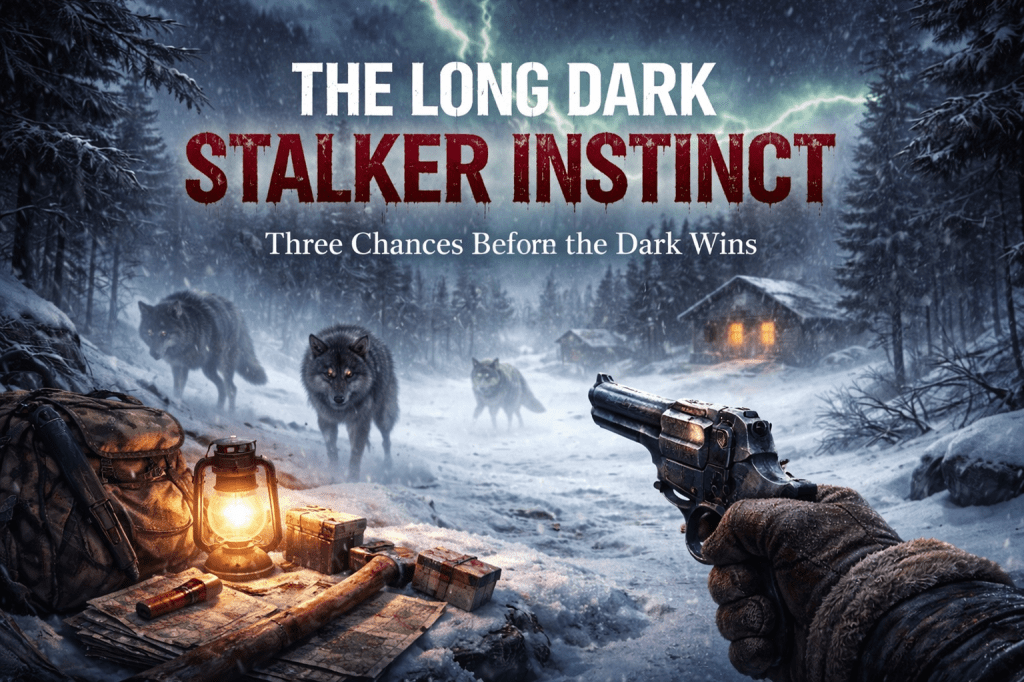
In the new year, I’ll be returning to The Long Dark on Stalker difficulty.
Not to prove anything. Not to play perfectly.
Just to see how long I can last when the world decides it’s done being forgiving.
This run will use the Cheat Death mechanic.
Not as an escape hatch, but as a countdown.
Three chances. That’s it.
Each death pushes the run closer to its end.
Each mistake lingers longer.
Each lesson may or may not be learned in time.
This isn’t about winning.
It’s about surviving long enough to leave notes behind.
This also marks the start of a long-overdue update to The Long Dark map hub. Interloper and Misery are finally getting proper coverage, with maps split by difficulty to reflect real loot behaviour rather than false guarantees.
This was my second attempt at Eliminate the Past.
The first ended quickly, mostly because I forgot to hit record. So I had to stop the trial midway through.
This time, I remembered to hit record.
Viewer discretion advised.The Outlast Trials is intended for mature audiences and contains graphic violence, disturbing imagery, and psychological horror.
Setup
For this run, I took the X-ray ability.
Not to min-max anything, but because wandering blindly on a timer felt like a bad idea.
The aim wasn’t to clear everything.
It was to get out before the door shut.
Eliminate the Past
There were ten records available.
I destroyed four.
That sounds low, but the Trial makes it clear very quickly that stopping for too long is how things go wrong.
Between patrols and the clock, every decision boiled down to whether it was worth the risk.
Most of the time, it wasn’t.
The Escape
When it was time to head back to the gymnasium to begin my escape from the Trial, I promptly got lost.
By the time I found my way back, I had three minutes to get out.
I managed it with roughly three seconds left on the clock.
I didn’t even notice the cop waiting to say goodbye — I just sprinted straight past him.
It didn’t feel like a win.
It felt like just about scraping through.
Afterwards
This Trial reinforced what the game has been pushing from the start:
you don’t need to do everything.
You just need to survive long enough to leave.
Four records destroyed.
Exit reached.
That was sufficient.
Series Notes
This was a single attempt, recorded as it happened.
There were no retries for recording purposes.
If I’d failed, that would have been the post.
I may return to this Trial again at the same difficulty.
For now, this is the record of how it went.
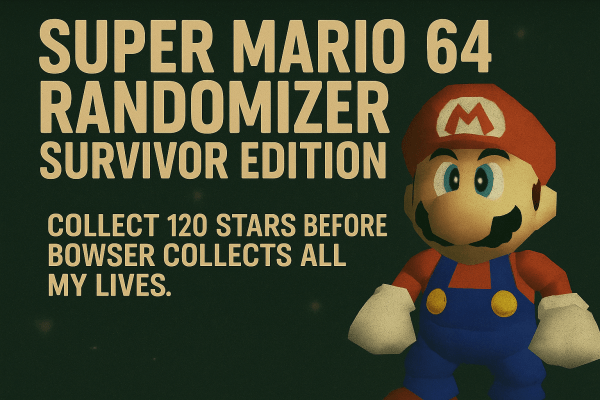
Bowser in the Fire Sea – Red Coins First, Regret Second
Two attempts to collect the red coins
Zero elegant jumps
One unavoidable lava tax
The star itself was worse than the coins. No safe angle.
A lost life was mandatory. I paid it and moved on.
Upstairs Confusion & Painting Roulette
Bob-Omb Battlefield → Bowser in the Dark World
Cool, Cool Mountain (allegedly)
Secret Slide (already done)
Whomp’s Fortress → actually Cool, Cool Mountain
Cool, Cool Mountain – Making It Work
Red coins were half-found and poorly remembered, so I pivoted to the 100 Coin Star. That meant slides, exits, re-entries,
and the game gently mocking me.
After exiting again, the first star appeared right in front of the big penguin,
as if it felt sorry for me.
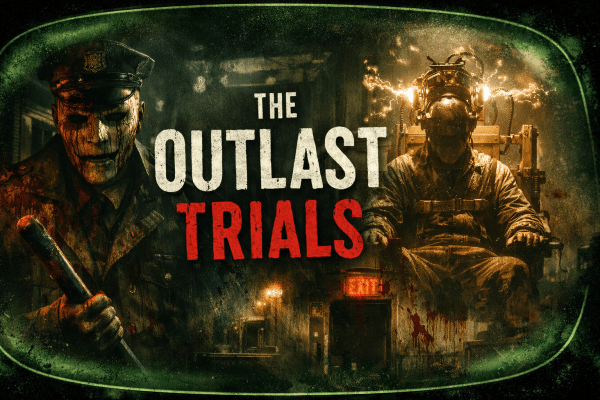
I’ve added a new hub page to the site for The Outlast Trials.
As the Survivor’s Dread side of the blog continues to grow, it made sense to give Outlast its own space — somewhere that keeps everything organised, easy to navigate, and separate from the calmer survival runs.
The hub brings together all Outlast Trials–related posts in one place, including logs, reflections, and anything else that emerges as the series develops. No hunting through categories. No guessing what order things came in.
This doesn’t mark a change in tone — Outlast is still intense, uncomfortable, and deliberately unsettling — but it does give it a clearer structure on the site. A dedicated place for controlled panic, bad decisions, and learning the hard way.
As more entries are added, they’ll all live there. One page. One thread. No chaos in the navigation, at least.
If you’ve been following the Outlast content so far, that’s now the best place to keep track of it.
With Christmas just around the corner, it felt like the right moment to pause and say thank you.
Not a big announcement. Not a recap post. Just a simple acknowledgement of everyone who has clicked a link, read a post, or stuck around longer than they had to.
This blog didn’t start with a plan, a schedule, or any expectations. It started as a place to put words somewhere instead of keeping them in my head. The fact that anyone else found their way here at all is something I don’t take lightly.
Whether you’ve been here since the early posts, discovered the blog through a game guide, or stumbled across it by accident and stayed for a bit — thank you. Every view, comment, and subscription is a quiet signal that the work landed somewhere.
I also want to thank the people who read without interacting. The quiet readers matter just as much. Not everything needs a comment to count.
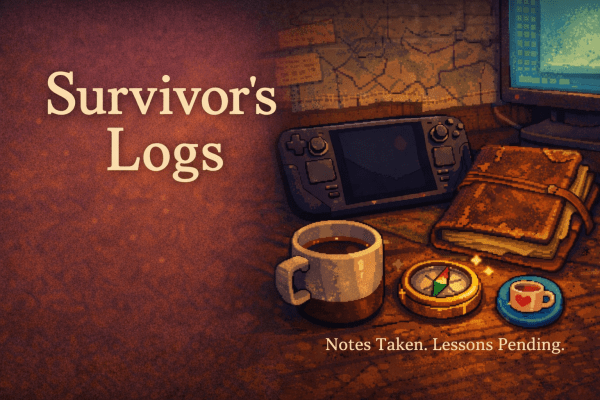
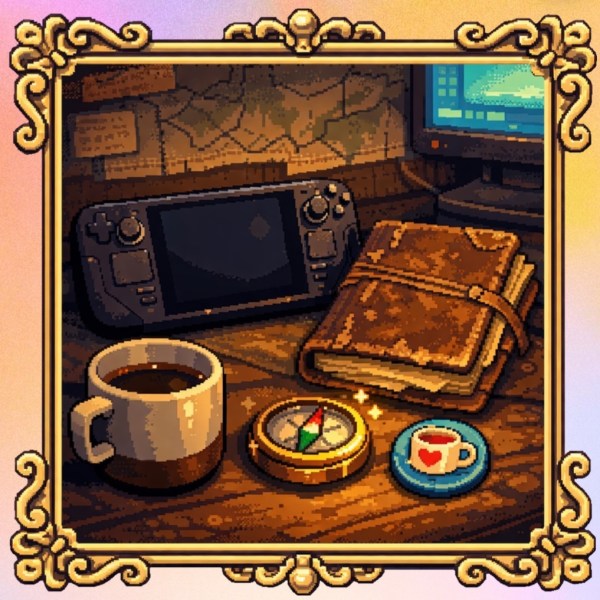
The image above feels fitting: a warm drink, a handheld console, a notebook, and a sense of pause. That’s what this space has become for me — and knowing it might be that for someone else too means more than numbers ever could.
I’ll keep writing. I’ll keep sharing what I make. And I’ll keep doing it in a way that feels honest, calm, and human.
Wherever you are, I hope you have a peaceful Christmas — or at least a quiet moment to yourself.
The biggest influences in my life haven’t always been specific people. More often, they’ve been patterns, ideas, and examples I’ve observed over time.
I’ve been shaped by watching how different people respond to pressure, responsibility, and change. Some examples showed me what to move toward. Others showed me what to avoid. Both mattered.
Consistency has been one of the strongest influences. People who show up, do what they say they’ll do, and don’t make a spectacle of it have always left a mark on me. Quiet reliability tends to stick longer than loud success.
I’ve also been influenced by creators, writers, and storytellers who focus on process rather than perfection. The idea that progress comes from small, repeated effort rather than big gestures is something I’ve carried with me.
Ultimately, the biggest influence has been learning to trust my own judgement over time. Taking lessons from the world around me, filtering them, and deciding what fits has mattered more than following any single voice.
Influence, for me, isn’t about imitation. It’s about alignment. Keeping what works, discarding what doesn’t, and building something that feels honest.
I know the year I was born sat in an interesting point of transition. It was a time when the world was shifting, but hadn’t fully realised it yet.
Technology was present, but it wasn’t everywhere. Things still felt physical. Media was something you interacted with deliberately, not something that followed you around all day. Entertainment, communication, and information all required a bit more effort than they do now.
From what I’ve learned since, it was also a period where optimism and uncertainty existed side by side. Big changes were underway, even if they weren’t obvious at the time. Looking back, it’s easy to see how much of what we now take for granted was just beginning to form.
I didn’t experience that year consciously, but its influence is there. It shaped the environment I grew up in, the pace of change I witnessed, and the way I tend to approach new ideas — cautiously curious, but grounded.
It wasn’t a defining year because of the date itself. It mattered because of the direction the world was moving in. And that context has always felt more important than the number.
This is the video companion to my first real Trial in The Outlast Trials.
A full, uncut solo run of Kill the Snitch, set in the police station.
No highlights.
No edits.
Just forty-four minutes of slow movement, bad assumptions, and learning the hard way.
Viewer discretion advised.The Outlast Trials is intended for mature audiences and contains graphic violence, disturbing imagery, and psychological horror. This content may not be suitable for all viewers.
All Trials in this series are played solo.
The Trial
Trial: Kill the Snitch
Location: Police Station
Mode: Solo
Difficulty: Lowest available
Runtime: 44 minutes (full run)
Even on the lowest difficulty, the tension never really lets up.
Standing still feels dangerous, objectives act like bait, and the moment you assume you’re safe, the game corrects you.
The Video
This is a slow first run, and that’s intentional.
I wanted to understand the rules of the Trial before pushing difficulty or modifiers.
First Takeaways
Clearing an area doesn’t mean it stays clear
Objectives attract attention
Being stationary is often the most dangerous choice
When things went wrong, it was usually because I misjudged sound, timing, or commitment — not because the game pulled a trick.
That consistency is what made the Trial so unsettling.
Where This Fits
This video is part of Survivor’s Dread — survival horror focused on tension, pressure, and endurance rather than mastery.
I don’t know how many more Trials will follow.
If there’s another, it’ll be logged the same way.
If not, this stands as a record of the experience.
Surviving, not suffering — even when the chaos is real.
I’m most happy when things are quiet and steady. Not silent, just settled. When there’s no rush to be anywhere else and no pressure to perform or explain myself.
That usually looks like having time to focus on something I enjoy without interruption. Writing, playing a game, or working through an idea from start to finish. Being absorbed in something simple but meaningful does more for me than big moments ever have.
I’m also happiest when things feel balanced. When the day has structure, but not rigidity. When there’s enough space to breathe, think, and reset without feeling like time is slipping away.
It’s not about excitement or constant positivity. It’s about calm satisfaction. The feeling that nothing is demanding attention right now, and that’s okay.
Those moments don’t last forever, but when they show up, they’re enough. That’s usually where happiness lives for me.

 Survivor Incognito