Super Mario 64 Randomizer – Log 8: Lava Coins & Cold Comfort

Run Type: Mario 64 Randomizer

Controller: Not an N64 controller, and it shows

Log 8 – Video

Bowser in the Fire Sea – Red Coins First, Regret Second

  • Two attempts to collect the red coins
  • Zero elegant jumps
  • One unavoidable lava tax

The star itself was worse than the coins. No safe angle.
A lost life was mandatory. I paid it and moved on.

Upstairs Confusion & Painting Roulette

  • Bob-Omb Battlefield → Bowser in the Dark World
  • Cool, Cool Mountain (allegedly)
  • Secret Slide (already done)
  • Whomp’s Fortress → actually Cool, Cool Mountain

Cool, Cool Mountain – Making It Work

Red coins were half-found and poorly remembered, so I pivoted to the
100 Coin Star. That meant slides, exits, re-entries,
and the game gently mocking me.

After exiting again, the first star appeared right in front of the big penguin,
as if it felt sorry for me.

Session Results

  • Bowser in the Fire Sea – Red Coin Star cleared
  • Cool, Cool Mountain – 3 / 7 stars
  • Lives lost: accepted

Continue the Randomizer

Randomizer Hub |
Log 7: Bowser in the Fire Sea Was Not the Plan |
Log 8 |
Log 9: Coming Soon

The Outlast Trials Hub Is Live

I’ve added a new hub page to the site for The Outlast Trials.

As the Survivor’s Dread side of the blog continues to grow, it made sense to give Outlast its own space — somewhere that keeps everything organised, easy to navigate, and separate from the calmer survival runs.

The hub brings together all Outlast Trials–related posts in one place, including logs, reflections, and anything else that emerges as the series develops. No hunting through categories. No guessing what order things came in.

You can find the hub here:

The Outlast Trials – Survivor’s Dread Hub

This doesn’t mark a change in tone — Outlast is still intense, uncomfortable, and deliberately unsettling — but it does give it a clearer structure on the site. A dedicated place for controlled panic, bad decisions, and learning the hard way.

As more entries are added, they’ll all live there. One page. One thread. No chaos in the navigation, at least.

If you’ve been following the Outlast content so far, that’s now the best place to keep track of it.

The Outlast Trials – Trial Log #1: Kill the Snitch

This is the video companion to my first real Trial in The Outlast Trials.
A full, uncut solo run of Kill the Snitch, set in the police station.

No highlights.
No edits.
Just forty-four minutes of slow movement, bad assumptions, and learning the hard way.

Viewer discretion advised. The Outlast Trials is intended for mature audiences and contains graphic violence, disturbing imagery, and psychological horror. This content may not be suitable for all viewers.

All Trials in this series are played solo.


The Trial

  • Trial: Kill the Snitch
  • Location: Police Station
  • Mode: Solo
  • Difficulty: Lowest available
  • Runtime: 44 minutes (full run)

Even on the lowest difficulty, the tension never really lets up.
Standing still feels dangerous, objectives act like bait, and the moment you assume you’re safe, the game corrects you.


The Video

This is a slow first run, and that’s intentional.
I wanted to understand the rules of the Trial before pushing difficulty or modifiers.


First Takeaways

  • Clearing an area doesn’t mean it stays clear
  • Objectives attract attention
  • Being stationary is often the most dangerous choice

When things went wrong, it was usually because I misjudged sound, timing, or commitment — not because the game pulled a trick.
That consistency is what made the Trial so unsettling.


Where This Fits

This video is part of Survivor’s Dread — survival horror focused on tension, pressure, and endurance rather than mastery.

I don’t know how many more Trials will follow.
If there’s another, it’ll be logged the same way.
If not, this stands as a record of the experience.

Surviving, not suffering — even when the chaos is real.

Super Mario 64 Randomizer – Log 7: Bowser in the Fire Sea Was Not the Plan

Super Mario 64 Randomizer Log 7: Bowser in the Fire Sea Was Not the Plan

Mode: Randomizer
Lives Remaining: 17
Stars Collected: 38
Stars Remaining: 82

With Tick Tock Clock finally behind me, I head back downstairs to see what’s lurking behind the entrance that should lead to Hazy Maze Cave. The answer, apparently, is Bowser in the Fire Sea.

To make matters worse, a quick look around confirms the red coins are floating over lava. That problem can wait.

Bowser First, Questions Later

After a few failed attempts getting my bearings, I respawn right next to the Bowser fight entrance. I briefly consider going for the red coins first, then decide against it. Survival comes first.

This somehow turns into the only time I’ve ever failed this fight. I misjudge my position, step where I shouldn’t, and Mario drops straight into the lava.

The second attempt goes as expected. Bowser goes down, the key is mine, and we all agree not to talk about the first try.

The Red Coins Problem

With upstairs now unlocked, I return to the Fire Sea red coins. Several attempts later, it’s clear this set is going to be a nuisance. Precision jumps over lava with a randomizer twist are not something to rush.

I leave them for another session — and another video.

Video

Run Status

  • Lives Remaining: 17
  • Stars Collected: 38
  • Stars Remaining: 82
  • Next Goal: Explore upstairs and see what the randomizer has moved.

Continue the Randomizer

Randomizer Hub |
Log 6: Time Stops for No Mario |
Log 7 |
Log 8

The Outlast Trials – A New Kind of Survival

I wasn’t planning on adding The Outlast Trials to the blog.
But sometimes a game doesn’t ask — it just gets under your skin and stays there.

After finishing the tutorial and stepping into my first real Trial, it became clear this was something different.
Not loud.
Not fast.
Just deeply uncomfortable in a way that lingers.

One Trial. No Safety Net.

I recorded my first full Trial — Kill the Snitch, set in the police station.
Solo.
Lowest difficulty.
No cuts.

It still took 44 minutes.
And it was still unsettling.

Standing still felt dangerous.
Objectives felt like bait.
And the moment I assumed I was safe, the game corrected me.

Why This Fits Here

This blog has always been about surviving pressure rather than mastering systems.
The Outlast Trials fits that idea perfectly.

  • No PvP meta
  • No optimisation race
  • No pretending you’re in control

Just learning, adapting, and getting through it.

What This Is (And Isn’t)

This isn’t a full commitment to a new series.
There’s no schedule, no roadmap, and no promise of completion.

Think of it as occasional Trial logs — documenting progression, mistakes, and moments where the game genuinely gets inside your head.

If nothing else, it’s a reminder that survival horror can still feel tense without being exhausting.

Coming Up

The first Trial log will be going live shortly, featuring the full 44-minute run.
Viewer discretion advised.

Sometimes surviving means knowing when to slow down.
The Outlast Trials makes sure you do.

This entry is part of Survivor’s Dread, where survival horror is about tension and endurance rather than mastery.

Dead by Daylight Isn’t Dead — But It Is Wearing Me Down

Dead by Daylight Isn’t Dead — But It Is Wearing Me Down

This is a harder post to write than I expected.
Not because I’m angry, but because Dead by Daylight is a game I used to genuinely love.
That’s what makes this year stand out — not one disaster, but how many small issues stacked up until enthusiasm quietly drained away.

On paper, Behaviour had a strong year.
In practice, it felt messy, defensive, and increasingly disconnected from the people actually playing the game.

Big Swings, Weak Follow-Through

There were real wins:

  • Major crossover moments
  • Long-requested licenses
  • Continued visibility and solid player numbers

But almost every win came with friction.
Momentum rarely turned into confidence.

The PTBs That Didn’t Listen

Twice this year, Behaviour tried to address slugging and tunnelling through PTBs.

The community response was immediate and consistent:

  • This won’t fix the problem
  • This adds frustration
  • This targets symptoms, not causes

Disagreement is normal.
Unified feedback being ignored is not.

When PTBs stop feeling like tests and start feeling like rehearsals for decisions already made, trust erodes fast.

The Livestream That Became a Case Study

The Walking Dead livestream should have been simple:

  • High-profile guest
  • One of the biggest DBD creators
  • A crossover meant to rebuild hype

Instead, it unravelled live.

Technical issues happen.
What mattered was watching the creator actively offer practical solutions — and being shut down by the developers on air.

That moment did more damage than the outage itself.
Flexibility gave way to control, and the optics flipped instantly.

Losing Michael Myers Changes Everything

This is no longer hypothetical.

Michael Myers — Dead by Daylight’s first licensed killer — is confirmed to be leaving the store.

Yes, if you own the chapter, you keep it.
The character will not disappear from existing accounts.

That does not soften the impact.

  • Myers isn’t just another license
  • He’s part of the game’s foundation
  • He proved licensed horror could work long-term in DBD

After Hellraiser, this confirms a pattern rather than an exception.
The unspoken promise that some things were permanent is gone.

“You Keep What You Bought” Isn’t Reassuring Anymore

Nothing is being taken away from existing players.
But the consequences are real:

  • New players lose access to a core horror icon
  • Foundational killers become legacy content
  • The game’s identity fragments over time

Live service games rely on trust that long-term investment matters.
That trust took a direct hit this year.

Licenses Won’t Fix Systems

Jason Voorhees would help.

  • Huge recognition
  • Immediate hype
  • A short-term surge in attention

But licenses don’t solve:

  • Tunnelling incentives
  • Slugging as pressure
  • Solo queue frustration
  • Meta fatigue

Without structural change, a new killer is a sugar rush — not a recovery.

This Isn’t Death. It’s Erosion.

Dead by Daylight isn’t dying.

What’s happening is quieter:

  • Players log in less
  • Defend the game less
  • Recommend it less
  • Shrug when things go wrong

That’s more dangerous than a loud collapse.

Why I’m Stepping Back — And Why That Makes Me Sad

This isn’t a goodbye post.

It’s a pause — and one I didn’t expect to need.

I wasn’t expecting to write a Dead by Daylight post for this blog at all.
At one point, I’d even planned a full page dedicated solely to DBD maps — layouts, loops, dead zones, the works.

That idea felt exciting then.
Now, it feels like a ship that sailed while I was still deciding whether to board.

Not because the maps stopped being interesting, but because my confidence in the game staying stable long-term quietly faded.
Without that confidence, it’s hard to justify investing that kind of time and care.

Maybe that changes one day.
I’d like it to.
But right now, this post exists not because I planned it — but because I needed to be honest about where things stand.

If Behaviour wants to steady the ship:

  • Announce less
  • Ship more
  • Fix incentives, not behaviour
  • Close the loop on feedback

Do that, and goodwill returns.

Without it, the game won’t collapse.
It’ll coast — carried by licenses and habit — while the people who cared most slowly disengage.

And that’s the part that genuinely makes me sad to write.

Clarification Note

  • Licensed content removed from sale is not removed from existing accounts
  • This post focuses on access, stability, and trust
  • Michael Myers’ removal is confirmed; broader concerns are based on precedent
Breaking (and Rebuilding) the Team: From Meta Comfort to Controlled Chaos

Breaking (and Rebuilding) the Team: From Meta Comfort to Controlled Chaos

After earning Guardian of Cantha and finally clearing the Fissure of Woe, I reached that familiar point in Guild Wars where the question isn’t “Can this team work?” but “Do I actually understand why it works?”

That question kicked off a long stretch of trial, error, backtracking, and a few ideas that didn’t survive first contact with Hard Mode. What followed wasn’t a clean break from the meta — it was a slow, deliberate push away from relying on it blindly.

Where This Started

This journey sits on the shoulders of two earlier milestones:

Both were achieved using a fairly standard Mesmer-heavy approach. Effective, yes — but also safe. Too safe.

The Long Experiment Phase

What followed was a revolving door of ideas:

  • An Elementalist replacing a Discord Necromancer
  • A third Ritualist focused on Preservation instead of BiP
  • Dropping BiP entirely in favour of a Dervish frontline
  • Swapping that Dervish for a Warrior
  • Trying an Elementalist again
  • Reducing Mesmers… then adding them back

Some of these worked briefly. Others collapsed almost immediately. A few taught me why the meta exists in the first place.

The biggest lesson? I wasn’t actually trying to avoid Mesmers — I was trying to avoid depending on them.

Lesson Learned:
The goal wasn’t to remove strong tools — it was to understand when and why they were necessary.

The Turning Point: Silkfang

Somewhere in the middle of all this, a Ranger pet tank build entered the picture.

That experiment led to an unexpected constant: a spider.

A trip to the Underworld later, Margrid emerged with a Dire Black Widow. Over time, that spider stopped being a gimmick and became something else entirely — a reliable frontline presence, a pressure sponge, and eventually the team mascot.

That story lives here:

The Final Team (At the Time of Writing)

After all the iteration, the team settled into a shape that felt both familiar and earned:

  • Me – Signet of Spirits Ritualist (offensive spirit artillery)
  • Jora – Hundred Blades Warrior (frontline anchor)
  • Gwen – Panic Mesmer (AoE shutdown)
  • Norgu – Energy Surge Mesmer (spike and execution)
  • Razah – Ineptitude Mesmer (melee control and blind)
  • Livia – N/Rt BiP Healer (energy engine and sustain)
  • Xandra – ST Ritualist (Shelter, Union, Displacement)

Optional flex: Margrid and Silkfang can rotate in when a pet tank or ranged pressure makes more sense for the area.

Design Philosophy:
Proactive defense, layered control, and damage that doesn’t rely on perfect execution.

Early Results

At the time of writing, this team has already cleared two bosses in Slavers’ Exile on Normal Mode.

That’s not a victory lap. Slavers is long, punishing, and Hard Mode is the real test — but it’s enough to confirm that the structure holds up under sustained pressure.

Normal Mode confirms stability. Hard Mode reveals cracks.

Looking Ahead

Urgoz’s Warren and The Deep are firmly on the radar. Both test endurance and discipline more than raw damage.

The Domain of Anguish remains the line in the sand — not avoided, just not rushed. When this team goes there, it needs to be intentional.

Conclusion

This team didn’t come together because I followed a guide. It came together because I kept asking what wasn’t working, changed one piece at a time, and paid attention to the results.

Some ideas stuck. Others didn’t. And a few led me right back to concepts I thought I’d outgrown — including the realisation that sometimes the meta works because it genuinely does.

What matters now is that I understand why this team works. Where it’s strong, where it’s fragile, and what kind of content it’s built for.

If it holds together in the places that matter most, there’ll be more to write about. And if it doesn’t, that might be even more interesting.

How a Spider Became the Team Mascot

How a Spider Became the Team Mascot

The honest tale of one achievement, several experiments, and an eight-legged promotion.

It all started with Guardian of Cantha

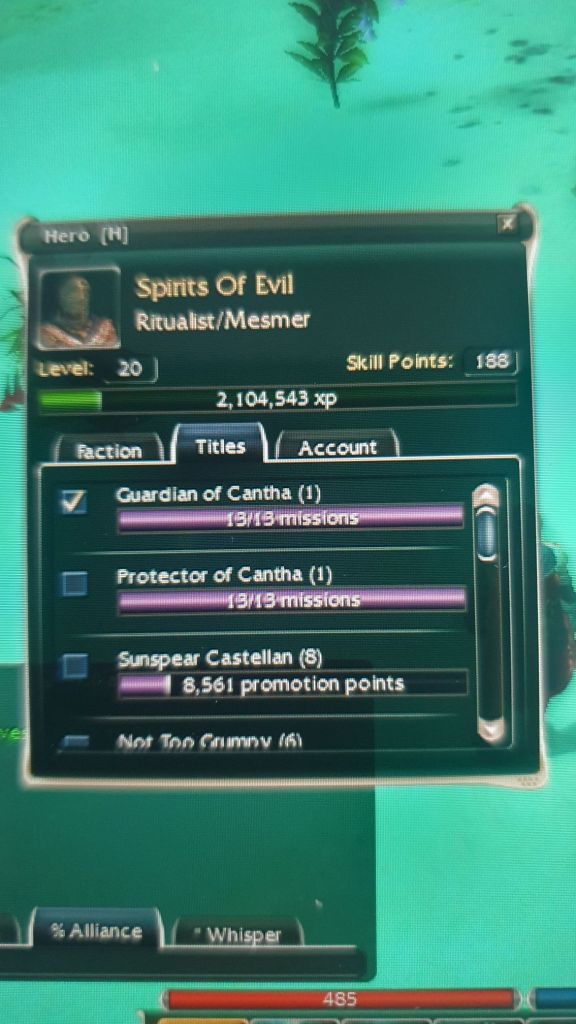
After finally earning Guardian of Cantha — fifteen years late, but who’s counting — I marched straight into Fissure of Woe and cleared it.

Great moment. Great screenshots. Full Mesmerway.

Once the glow wore off, I had the realisation every returning player hits eventually:

Yes, this build works everywhere.
No, it isn’t my build.

So the dismantling began.

Breaking away from the meta

Mesmerway is powerful. Reliable. Efficient. And completely soulless.

I wanted friction again — a team I had to think about, not just preload.

So I tore the core out:

  • Panic instead of Energy Surge
  • Ineptitude for variety. Then swapped back for Energy Surge
  • Healers reworked
  • Soul Twist Ritualist fine-tuned
  • Necros rebuilt

It was messy, expensive, and brilliant.

But the frontline was still empty.

I wanted something alive up there.

The pet tank discovery

While looking for ways to create a stable frontline without going full Warrior or Paragon, I stumbled on the pet tank concept.

It solved more problems than expected:

  • Reliable aggro
  • High armour scaling
  • Expertise reducing the cost of support skills
  • No tendency to wander off like a melee hero

I just needed the right animal.

And if I was going to commit to this chaos, I might as well go all in.

The Underworld trip for a spider

Some pets are noble. Some are adorable. Some don’t immediately try to kill you.

I chose none of those.

One trip to the Underworld, a careful charm attempt, and I walked out with a Dire Black Widow who radiated “I will absolutely bite a god if required.”

At this point she had no name — just the spider. A silent, glaring addition to the roster.

But she earned her place fast.

Testing, tweaking, breaking things for science

With the spider holding aggro, the test runs began:

  • Zaishen vanquishes: smooth
  • FoW: promising
  • UW: somehow alive longer than expected
  • Tombs: died to siege wurms, but everyone does
  • Multiple hero rewrites: several necromancers were harmed during development
  • Elementalist experiment: retired politely
  • Barrage tests: fun but not quite right
  • Dervish added to the frontline: finally clicked

Piece by piece, the team rebuilt itself into something new.

The frontline comes together

The final breakthrough was adding a Dervish.

Avatar of Melandru. Durable. Clean aggro. Good synergy with the healers and spirit line.

Suddenly the frontline wasn’t theoretical anymore:

Dervish + Spider.
Heavy hitter + tank.
Structure + chaos.

It worked.

But the real test was still ahead: Shiro Tagachi, Hard Mode, Master’s reward timer.

The Shiro fight — where the spider earned her name

I entered the Imperial Sanctum fight expecting to scrape by. I left it staring at the clock:

1 minute 55 seconds.

Shiro never recovered from Broad Head Arrow. The Dervish tore through him. The team melted health bars like they owed us money.

And the spider?

She tanked. She held aggro. She bit Shiro with the commitment of someone settling an old grudge.

When the dust settled, I looked at Margrid’s widow and muttered:

“…Silkfang. That’s your name.”

Because after that performance, she wasn’t “the spider” anymore. She was part of the team — the part that didn’t flinch.

And that’s how the mascot was born.

Silkfang, as I imagine her in real life: not monstrous, not magical — just a fiercely alert black widow with enough intelligence behind the eyes to understand every fight before it starts.

Why Silkfang stays

Not because she was planned. Not because she’s optimal.

But because she embodies the whole journey:

  • Breaking the meta
  • Experimenting with builds
  • Finding joy in nonsense that somehow works
  • Rebuilding the team into something uniquely mine

Silkfang is the symbol of all of that.

A quiet, eight-legged reminder that sometimes the best part of Guild Wars is abandoning the expected path and discovering something brilliant in its place.

Long live Silkfang. Frontliner. Mascot. And the only creature in Tyria who can tank Shiro without complaining.

Fissure of Woe: A Clear 15 Years in the Making

Fissure of Woe: A Clear 15 Years in the Making

If you’d told younger me that I’d eventually beat the Fissure of Woe without a Barrage/Pet group, I’d have laughed.
Back then, FoW was something I visited, not something I finished. I joined random B/P teams, fired arrows at anything that moved,
and hoped the pets would tank things they absolutely shouldn’t have been tanking.
I even tried the old ranger solo runs to the Forest — mostly because everyone else was doing it and I wanted to feel cool.

A full clear though?
That never happened.
FoW politely reminded me I was not the hero of this story.

Until now.

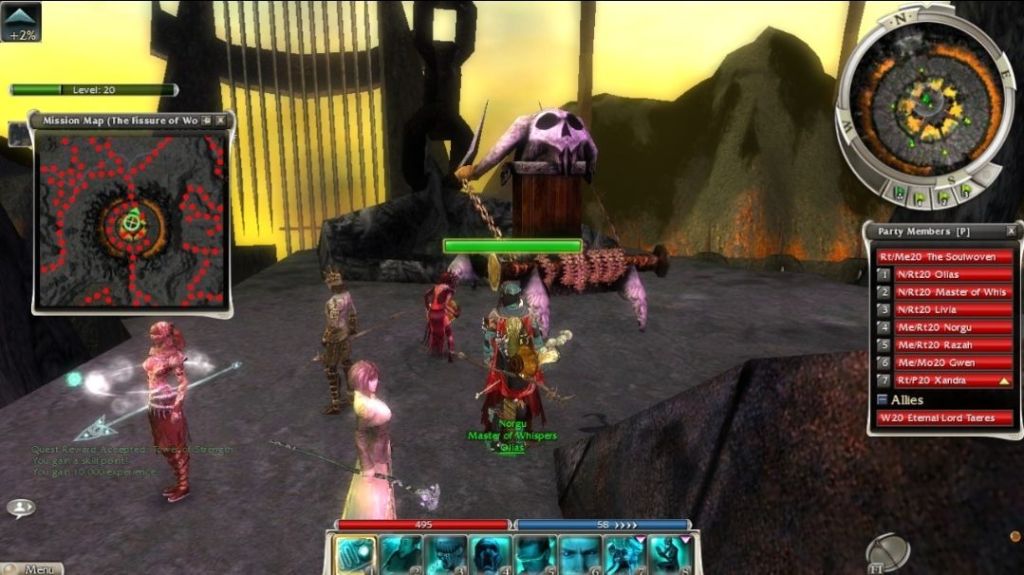
Standing at the Chest of Woe after my first full Fissure of Woe clear — a moment fifteen years overdue.

The Soulwoven Steps Back Into the Fire

This was my first proper attempt at beating FoW from start to finish — no gimmicks, no leaning on other players to carry me,
and no pretending my ranger pet was going to solve my problems.
Just me, The Soulwoven, and a hero team that has become far too competent for its own good.

This photo above is from the full clear —it captures the general theme of this entire adventure:
me walking into a nightmare realm with seven spirits, three mesmers, three necromancers, a ritualist specialising in restoration spirits, and questionable confidence.

The Wovenway Build Holds Its Ground

For this run I used the build I’ve been refining over the last week: a mix of spiritway, discordway, and mesmerway —
which I’ve nicknamed Wovenway.
Tacky? Possibly.
Accurate? Absolutely.

My heroes did the heavy lifting, as usual.
The E-Surge mesmers handled the hex pressure, the Discord minions kept bodies on the ground (helpful for both damage and nostalgia),
and my restoration Ritualist quietly kept everyone alive.
I focused on offensive spirits and Lamentation, occasionally pretending I understood the exact timing of everything happening on-screen.

A Run That Paid for Itself

To my surprise, the run went smoothly.
Suspiciously smoothly.
Either I’ve improved, or the enemies were having an off day.

I walked out with:

  • Two Passage Scrolls
  • Five Obsidian Shards
  • Several gold items

Not bad for what was meant to be “a test run.”
The whole trip paid for itself and then some.

What Comes Next?

FoW is just the beginning.
I’m still working on hero armor — Gwen, Livia, and Xandra now have Brotherhood sets, the rest are getting sorted one by one —
and I’ve been dipping into the Underworld again to see just how far Wovenway can go.

There’s also a strong temptation to record these runs.
Not a single-session full clear (I value sleep), but segmented videos:
three quests at a time, then stitched together.
Practical hero management, realistic expectations, and my usual commentary whenever something explodes unexpectedly.

Final Thoughts

Final Thoughts

It took more than a decade, a new name, and a surprisingly effective team of heroes,
but I can finally say I’ve beaten the Fissure of Woe.
Not as a ranger hiding behind pets, not as a tag-along in someone else’s group —
but on my own terms, with my own build, playing a class that younger me barely even understood.

FoW didn’t stand a chance.
Apparently, neither did my free time.


Continue the Journey

Earning Guardian of Cantha — Fifteen Years Later


It turns out my return to Tyria didn’t stop at nostalgia. What started as a simple “let’s see if this still runs on the Steam Deck” somehow turned into a full plunge back into Guild Wars—titles, missions, buildcrafting, and all.

If you missed the first part of this journey, you can read my original post here:

Returning to Tyria – A Moment I Didn’t Expect to Hit This Hard
.
That’s where I covered the first spark that pulled me back in before everything below really started to snowball.

Switching Mains After Fifteen Years

Somewhere along the way I realised my Necromancer—my old faithful—wasn’t the one carrying me this time. Instead, it was my Ritualist, originally named Spirits of Evil, still running the exact same Signet of Spirits build I’d left him with more than a decade ago. And somehow, it still worked.

From there I set one clear goal: Guardian of Cantha. I already had Protector from years ago, but Hard Mode was unfinished business.

Diving Into Builds: Discordway, Mesmerway, and… Wovenway?

Discovering the PvX wiki still existed felt like finding a time capsule. Between that and help from chatgpt, I rebuilt my hero team from the ground up. Discordway led me to Mesmerway, and eventually I stitched the two together with my own Ritualist style—what I jokingly call Wovenway.

The final setup:

  • 1 Discord Minion Master
  • 2 N/Rt healers
  • 3 Energy Surge Mesmers
  • 1 Restoration Ritualist (hero)
  • Me, running offensive spirits

Zen Daijun was the first wall. Eternal Grove was the second. But with enough testing—and a lot of stubbornness—the team broke through both.

Guardian of Cantha Achieved

Raisu Palace fell, and with it came the achievement I’d been chasing since the mid-2000s.

A New Name, A New Look

To mark the achievement, I gave my Ritualist a new identity: The Soulwoven. The name clicked immediately—something that sounded like an NPC title, or a boss you’d find lurking in the Underworld.

I recoloured his armor in a blue-green mix to match spirit animations, and honestly? It suits him far better than anything he’s worn before.

What Comes Next?

Right now, I’m upgrading hero armor. Gwen, Livia, and Xandra are already wearing Brotherhood sets; the rest of the roster is still on the to-do list. When that’s done, The Soulwoven has his eyes on two places:

  • The Fissure of Woe
  • The Underworld

I’ve been doing test runs, but nothing concrete yet. Which direction he goes first… well, that’s something future me will decide.

Blog at WordPress.com.

Up ↑