If you want to keep up with what I’m playing, recording, or writing between blog posts,
the easiest way is to follow me on social media.
I share short clips, updates, and moments there —
sometimes things that never quite justify a full blog entry.
Recent Short
A brief moment from The Outlast Trials, shared as a short.
These clips usually capture instinctive reactions, close calls, or situations where stopping to think would have been a mistake.
You’ll find links to all my social platforms at the top and bottom of the site.
That’s intentional.
I’d rather keep everything visible and easy to find than rely on pop-ups or constant reminders.
No pressure.
No expectations.
Just another way to follow along if you want to.
I’m starting a new playthrough of Outlast, using what I’m calling the Apex Predator ruleset.
The idea is simple:
every death counts.
Three strikes, and the run ends.
Outlast isn’t a power fantasy.
You can’t fight back.
You can’t overpower anything.
Survival comes down to awareness, restraint, and not making the wrong decision at the wrong time.
The Apex Predator ruleset exists to give those moments weight.
It allows room to learn without encouraging recklessness.
This was my second attempt at Eliminate the Past.
The first ended quickly, mostly because I forgot to hit record. So I had to stop the trial midway through.
This time, I remembered to hit record.
Viewer discretion advised.The Outlast Trials is intended for mature audiences and contains graphic violence, disturbing imagery, and psychological horror.
Setup
For this run, I took the X-ray ability.
Not to min-max anything, but because wandering blindly on a timer felt like a bad idea.
The aim wasn’t to clear everything.
It was to get out before the door shut.
Eliminate the Past
There were ten records available.
I destroyed four.
That sounds low, but the Trial makes it clear very quickly that stopping for too long is how things go wrong.
Between patrols and the clock, every decision boiled down to whether it was worth the risk.
Most of the time, it wasn’t.
The Escape
When it was time to head back to the gymnasium to begin my escape from the Trial, I promptly got lost.
By the time I found my way back, I had three minutes to get out.
I managed it with roughly three seconds left on the clock.
I didn’t even notice the cop waiting to say goodbye — I just sprinted straight past him.
It didn’t feel like a win.
It felt like just about scraping through.
Afterwards
This Trial reinforced what the game has been pushing from the start:
you don’t need to do everything.
You just need to survive long enough to leave.
Four records destroyed.
Exit reached.
That was sufficient.
Series Notes
This was a single attempt, recorded as it happened.
There were no retries for recording purposes.
If I’d failed, that would have been the post.
I may return to this Trial again at the same difficulty.
For now, this is the record of how it went.
This is the video companion to my first real Trial in The Outlast Trials.
A full, uncut solo run of Kill the Snitch, set in the police station.
No highlights.
No edits.
Just forty-four minutes of slow movement, bad assumptions, and learning the hard way.
Viewer discretion advised.The Outlast Trials is intended for mature audiences and contains graphic violence, disturbing imagery, and psychological horror. This content may not be suitable for all viewers.
All Trials in this series are played solo.
The Trial
Trial: Kill the Snitch
Location: Police Station
Mode: Solo
Difficulty: Lowest available
Runtime: 44 minutes (full run)
Even on the lowest difficulty, the tension never really lets up.
Standing still feels dangerous, objectives act like bait, and the moment you assume you’re safe, the game corrects you.
The Video
This is a slow first run, and that’s intentional.
I wanted to understand the rules of the Trial before pushing difficulty or modifiers.
First Takeaways
Clearing an area doesn’t mean it stays clear
Objectives attract attention
Being stationary is often the most dangerous choice
When things went wrong, it was usually because I misjudged sound, timing, or commitment — not because the game pulled a trick.
That consistency is what made the Trial so unsettling.
Where This Fits
This video is part of Survivor’s Dread — survival horror focused on tension, pressure, and endurance rather than mastery.
I don’t know how many more Trials will follow.
If there’s another, it’ll be logged the same way.
If not, this stands as a record of the experience.
Surviving, not suffering — even when the chaos is real.
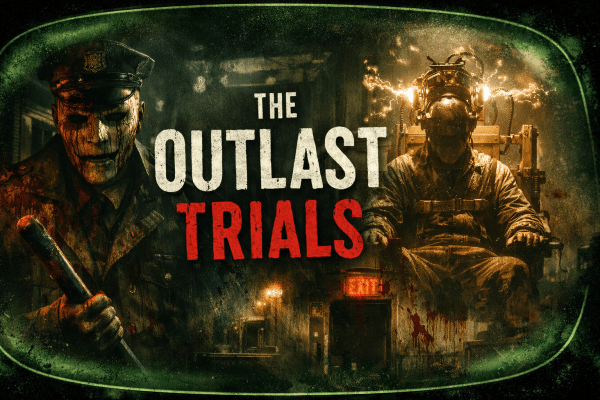
I wasn’t planning on adding The Outlast Trials to the blog. But sometimes a game doesn’t ask — it just gets under your skin and stays there.
After finishing the tutorial and stepping into my first real Trial, it became clear this was something different. Not loud. Not fast. Just deeply uncomfortable in a way that lingers.
One Trial. No Safety Net.
I recorded my first full Trial — Kill the Snitch, set in the police station. Solo. Lowest difficulty. No cuts.
It still took 44 minutes. And it was still unsettling.
Standing still felt dangerous. Objectives felt like bait. And the moment I assumed I was safe, the game corrected me.
Why This Fits Here
This blog has always been about surviving pressure rather than mastering systems. The Outlast Trials fits that idea perfectly.
No PvP meta
No optimisation race
No pretending you’re in control
Just learning, adapting, and getting through it.
What This Is (And Isn’t)
This isn’t a full commitment to a new series. There’s no schedule, no roadmap, and no promise of completion.
Think of it as occasional Trial logs — documenting progression, mistakes, and moments where the game genuinely gets inside your head.
If nothing else, it’s a reminder that survival horror can still feel tense without being exhausting.
Coming Up
The first Trial log will be going live shortly, featuring the full 44-minute run. Viewer discretion advised.
Sometimes surviving means knowing when to slow down. The Outlast Trials makes sure you do.
This entry is part of Survivor’s Dread, where survival horror is about tension and endurance rather than mastery.

 Survivor Incognito