Breaking (and Rebuilding) the Team: From Meta Comfort to Controlled Chaos

Breaking (and Rebuilding) the Team: From Meta Comfort to Controlled Chaos

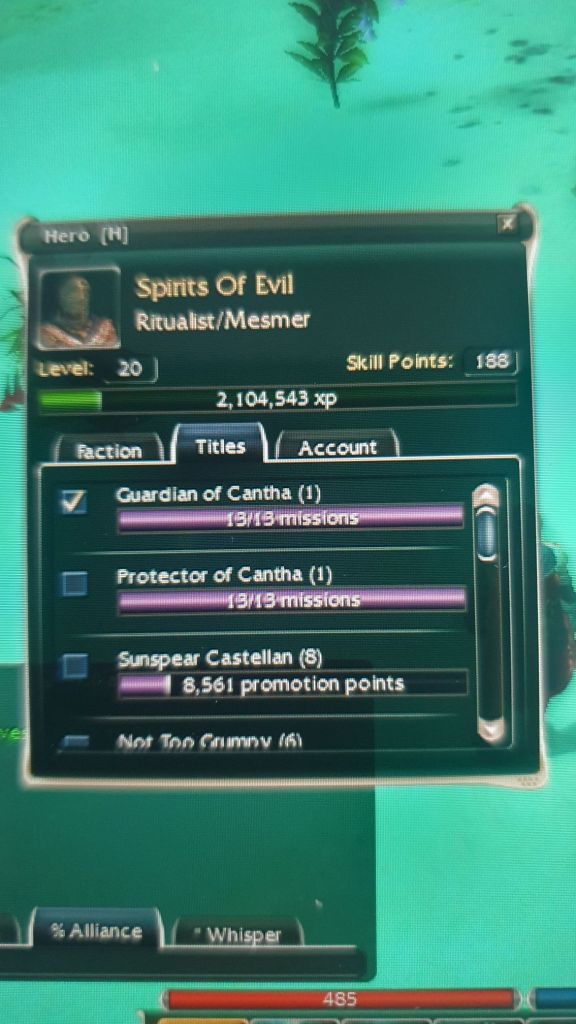
After earning Guardian of Cantha and finally clearing the Fissure of Woe, I reached that familiar point in Guild Wars where the question isn’t “Can this team work?” but “Do I actually understand why it works?”

That question kicked off a long stretch of trial, error, backtracking, and a few ideas that didn’t survive first contact with Hard Mode. What followed wasn’t a clean break from the meta — it was a slow, deliberate push away from relying on it blindly.

Where This Started

This journey sits on the shoulders of two earlier milestones:

Both were achieved using a fairly standard Mesmer-heavy approach. Effective, yes — but also safe. Too safe.

The Long Experiment Phase

What followed was a revolving door of ideas:

  • An Elementalist replacing a Discord Necromancer
  • A third Ritualist focused on Preservation instead of BiP
  • Dropping BiP entirely in favour of a Dervish frontline
  • Swapping that Dervish for a Warrior
  • Trying an Elementalist again
  • Reducing Mesmers… then adding them back

Some of these worked briefly. Others collapsed almost immediately. A few taught me why the meta exists in the first place.

The biggest lesson? I wasn’t actually trying to avoid Mesmers — I was trying to avoid depending on them.

Lesson Learned:
The goal wasn’t to remove strong tools — it was to understand when and why they were necessary.

The Turning Point: Silkfang

Somewhere in the middle of all this, a Ranger pet tank build entered the picture.

That experiment led to an unexpected constant: a spider.

A trip to the Underworld later, Margrid emerged with a Dire Black Widow. Over time, that spider stopped being a gimmick and became something else entirely — a reliable frontline presence, a pressure sponge, and eventually the team mascot.

That story lives here:

The Final Team (At the Time of Writing)

After all the iteration, the team settled into a shape that felt both familiar and earned:

  • Me – Signet of Spirits Ritualist (offensive spirit artillery)
  • Jora – Hundred Blades Warrior (frontline anchor)
  • Gwen – Panic Mesmer (AoE shutdown)
  • Norgu – Energy Surge Mesmer (spike and execution)
  • Razah – Ineptitude Mesmer (melee control and blind)
  • Livia – N/Rt BiP Healer (energy engine and sustain)
  • Xandra – ST Ritualist (Shelter, Union, Displacement)

Optional flex: Margrid and Silkfang can rotate in when a pet tank or ranged pressure makes more sense for the area.

Design Philosophy:
Proactive defense, layered control, and damage that doesn’t rely on perfect execution.

Early Results

At the time of writing, this team has already cleared two bosses in Slavers’ Exile on Normal Mode.

That’s not a victory lap. Slavers is long, punishing, and Hard Mode is the real test — but it’s enough to confirm that the structure holds up under sustained pressure.

Normal Mode confirms stability. Hard Mode reveals cracks.

Looking Ahead

Urgoz’s Warren and The Deep are firmly on the radar. Both test endurance and discipline more than raw damage.

The Domain of Anguish remains the line in the sand — not avoided, just not rushed. When this team goes there, it needs to be intentional.

Conclusion

This team didn’t come together because I followed a guide. It came together because I kept asking what wasn’t working, changed one piece at a time, and paid attention to the results.

Some ideas stuck. Others didn’t. And a few led me right back to concepts I thought I’d outgrown — including the realisation that sometimes the meta works because it genuinely does.

What matters now is that I understand why this team works. Where it’s strong, where it’s fragile, and what kind of content it’s built for.

If it holds together in the places that matter most, there’ll be more to write about. And if it doesn’t, that might be even more interesting.

How a Spider Became the Team Mascot

How a Spider Became the Team Mascot

The honest tale of one achievement, several experiments, and an eight-legged promotion.

It all started with Guardian of Cantha

After finally earning Guardian of Cantha — fifteen years late, but who’s counting — I marched straight into Fissure of Woe and cleared it.

Great moment. Great screenshots. Full Mesmerway.

Once the glow wore off, I had the realisation every returning player hits eventually:

Yes, this build works everywhere.
No, it isn’t my build.

So the dismantling began.

Breaking away from the meta

Mesmerway is powerful. Reliable. Efficient. And completely soulless.

I wanted friction again — a team I had to think about, not just preload.

So I tore the core out:

  • Panic instead of Energy Surge
  • Ineptitude for variety. Then swapped back for Energy Surge
  • Healers reworked
  • Soul Twist Ritualist fine-tuned
  • Necros rebuilt

It was messy, expensive, and brilliant.

But the frontline was still empty.

I wanted something alive up there.

The pet tank discovery

While looking for ways to create a stable frontline without going full Warrior or Paragon, I stumbled on the pet tank concept.

It solved more problems than expected:

  • Reliable aggro
  • High armour scaling
  • Expertise reducing the cost of support skills
  • No tendency to wander off like a melee hero

I just needed the right animal.

And if I was going to commit to this chaos, I might as well go all in.

The Underworld trip for a spider

Some pets are noble. Some are adorable. Some don’t immediately try to kill you.

I chose none of those.

One trip to the Underworld, a careful charm attempt, and I walked out with a Dire Black Widow who radiated “I will absolutely bite a god if required.”

At this point she had no name — just the spider. A silent, glaring addition to the roster.

But she earned her place fast.

Testing, tweaking, breaking things for science

With the spider holding aggro, the test runs began:

  • Zaishen vanquishes: smooth
  • FoW: promising
  • UW: somehow alive longer than expected
  • Tombs: died to siege wurms, but everyone does
  • Multiple hero rewrites: several necromancers were harmed during development
  • Elementalist experiment: retired politely
  • Barrage tests: fun but not quite right
  • Dervish added to the frontline: finally clicked

Piece by piece, the team rebuilt itself into something new.

The frontline comes together

The final breakthrough was adding a Dervish.

Avatar of Melandru. Durable. Clean aggro. Good synergy with the healers and spirit line.

Suddenly the frontline wasn’t theoretical anymore:

Dervish + Spider.
Heavy hitter + tank.
Structure + chaos.

It worked.

But the real test was still ahead: Shiro Tagachi, Hard Mode, Master’s reward timer.

The Shiro fight — where the spider earned her name

I entered the Imperial Sanctum fight expecting to scrape by. I left it staring at the clock:

1 minute 55 seconds.

Shiro never recovered from Broad Head Arrow. The Dervish tore through him. The team melted health bars like they owed us money.

And the spider?

She tanked. She held aggro. She bit Shiro with the commitment of someone settling an old grudge.

When the dust settled, I looked at Margrid’s widow and muttered:

“…Silkfang. That’s your name.”

Because after that performance, she wasn’t “the spider” anymore. She was part of the team — the part that didn’t flinch.

And that’s how the mascot was born.

Silkfang, as I imagine her in real life: not monstrous, not magical — just a fiercely alert black widow with enough intelligence behind the eyes to understand every fight before it starts.

Why Silkfang stays

Not because she was planned. Not because she’s optimal.

But because she embodies the whole journey:

  • Breaking the meta
  • Experimenting with builds
  • Finding joy in nonsense that somehow works
  • Rebuilding the team into something uniquely mine

Silkfang is the symbol of all of that.

A quiet, eight-legged reminder that sometimes the best part of Guild Wars is abandoning the expected path and discovering something brilliant in its place.

Long live Silkfang. Frontliner. Mascot. And the only creature in Tyria who can tank Shiro without complaining.

Fissure of Woe: A Clear 15 Years in the Making

Fissure of Woe: A Clear 15 Years in the Making

If you’d told younger me that I’d eventually beat the Fissure of Woe without a Barrage/Pet group, I’d have laughed.
Back then, FoW was something I visited, not something I finished. I joined random B/P teams, fired arrows at anything that moved,
and hoped the pets would tank things they absolutely shouldn’t have been tanking.
I even tried the old ranger solo runs to the Forest — mostly because everyone else was doing it and I wanted to feel cool.

A full clear though?
That never happened.
FoW politely reminded me I was not the hero of this story.

Until now.

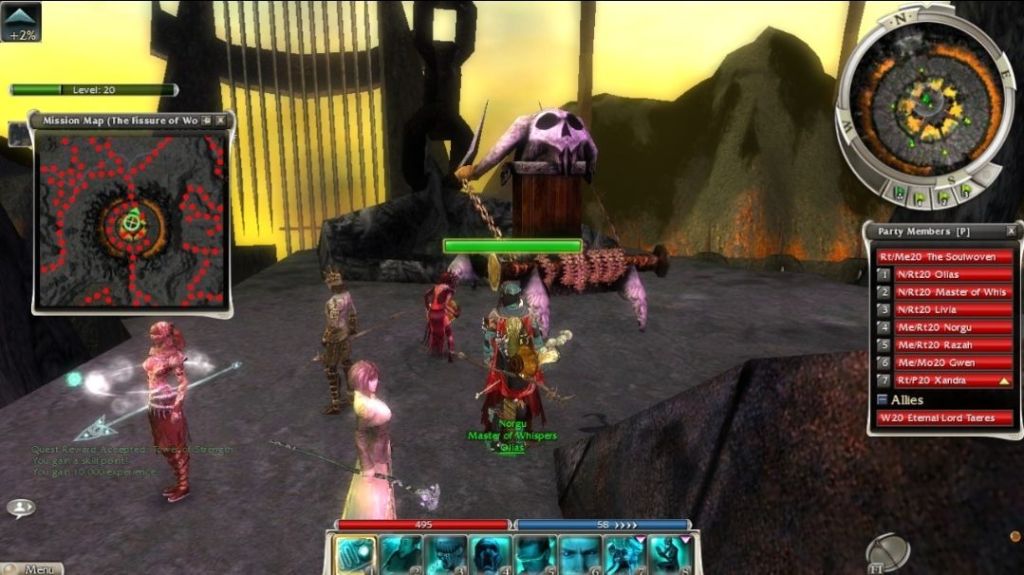
Standing at the Chest of Woe after my first full Fissure of Woe clear — a moment fifteen years overdue.

The Soulwoven Steps Back Into the Fire

This was my first proper attempt at beating FoW from start to finish — no gimmicks, no leaning on other players to carry me,
and no pretending my ranger pet was going to solve my problems.
Just me, The Soulwoven, and a hero team that has become far too competent for its own good.

This photo above is from the full clear —it captures the general theme of this entire adventure:
me walking into a nightmare realm with seven spirits, three mesmers, three necromancers, a ritualist specialising in restoration spirits, and questionable confidence.

The Wovenway Build Holds Its Ground

For this run I used the build I’ve been refining over the last week: a mix of spiritway, discordway, and mesmerway —
which I’ve nicknamed Wovenway.
Tacky? Possibly.
Accurate? Absolutely.

My heroes did the heavy lifting, as usual.
The E-Surge mesmers handled the hex pressure, the Discord minions kept bodies on the ground (helpful for both damage and nostalgia),
and my restoration Ritualist quietly kept everyone alive.
I focused on offensive spirits and Lamentation, occasionally pretending I understood the exact timing of everything happening on-screen.

A Run That Paid for Itself

To my surprise, the run went smoothly.
Suspiciously smoothly.
Either I’ve improved, or the enemies were having an off day.

I walked out with:

  • Two Passage Scrolls
  • Five Obsidian Shards
  • Several gold items

Not bad for what was meant to be “a test run.”
The whole trip paid for itself and then some.

What Comes Next?

FoW is just the beginning.
I’m still working on hero armor — Gwen, Livia, and Xandra now have Brotherhood sets, the rest are getting sorted one by one —
and I’ve been dipping into the Underworld again to see just how far Wovenway can go.

There’s also a strong temptation to record these runs.
Not a single-session full clear (I value sleep), but segmented videos:
three quests at a time, then stitched together.
Practical hero management, realistic expectations, and my usual commentary whenever something explodes unexpectedly.

Final Thoughts

Final Thoughts

It took more than a decade, a new name, and a surprisingly effective team of heroes,
but I can finally say I’ve beaten the Fissure of Woe.
Not as a ranger hiding behind pets, not as a tag-along in someone else’s group —
but on my own terms, with my own build, playing a class that younger me barely even understood.

FoW didn’t stand a chance.
Apparently, neither did my free time.


Continue the Journey

Earning Guardian of Cantha — Fifteen Years Later


It turns out my return to Tyria didn’t stop at nostalgia. What started as a simple “let’s see if this still runs on the Steam Deck” somehow turned into a full plunge back into Guild Wars—titles, missions, buildcrafting, and all.

If you missed the first part of this journey, you can read my original post here:

Returning to Tyria – A Moment I Didn’t Expect to Hit This Hard
.
That’s where I covered the first spark that pulled me back in before everything below really started to snowball.

Switching Mains After Fifteen Years

Somewhere along the way I realised my Necromancer—my old faithful—wasn’t the one carrying me this time. Instead, it was my Ritualist, originally named Spirits of Evil, still running the exact same Signet of Spirits build I’d left him with more than a decade ago. And somehow, it still worked.

From there I set one clear goal: Guardian of Cantha. I already had Protector from years ago, but Hard Mode was unfinished business.

Diving Into Builds: Discordway, Mesmerway, and… Wovenway?

Discovering the PvX wiki still existed felt like finding a time capsule. Between that and help from chatgpt, I rebuilt my hero team from the ground up. Discordway led me to Mesmerway, and eventually I stitched the two together with my own Ritualist style—what I jokingly call Wovenway.

The final setup:

  • 1 Discord Minion Master
  • 2 N/Rt healers
  • 3 Energy Surge Mesmers
  • 1 Restoration Ritualist (hero)
  • Me, running offensive spirits

Zen Daijun was the first wall. Eternal Grove was the second. But with enough testing—and a lot of stubbornness—the team broke through both.

Guardian of Cantha Achieved

Raisu Palace fell, and with it came the achievement I’d been chasing since the mid-2000s.

A New Name, A New Look

To mark the achievement, I gave my Ritualist a new identity: The Soulwoven. The name clicked immediately—something that sounded like an NPC title, or a boss you’d find lurking in the Underworld.

I recoloured his armor in a blue-green mix to match spirit animations, and honestly? It suits him far better than anything he’s worn before.

What Comes Next?

Right now, I’m upgrading hero armor. Gwen, Livia, and Xandra are already wearing Brotherhood sets; the rest of the roster is still on the to-do list. When that’s done, The Soulwoven has his eyes on two places:

  • The Fissure of Woe
  • The Underworld

I’ve been doing test runs, but nothing concrete yet. Which direction he goes first… well, that’s something future me will decide.

Blog at WordPress.com.

Up ↑